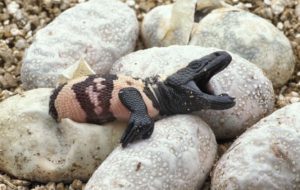
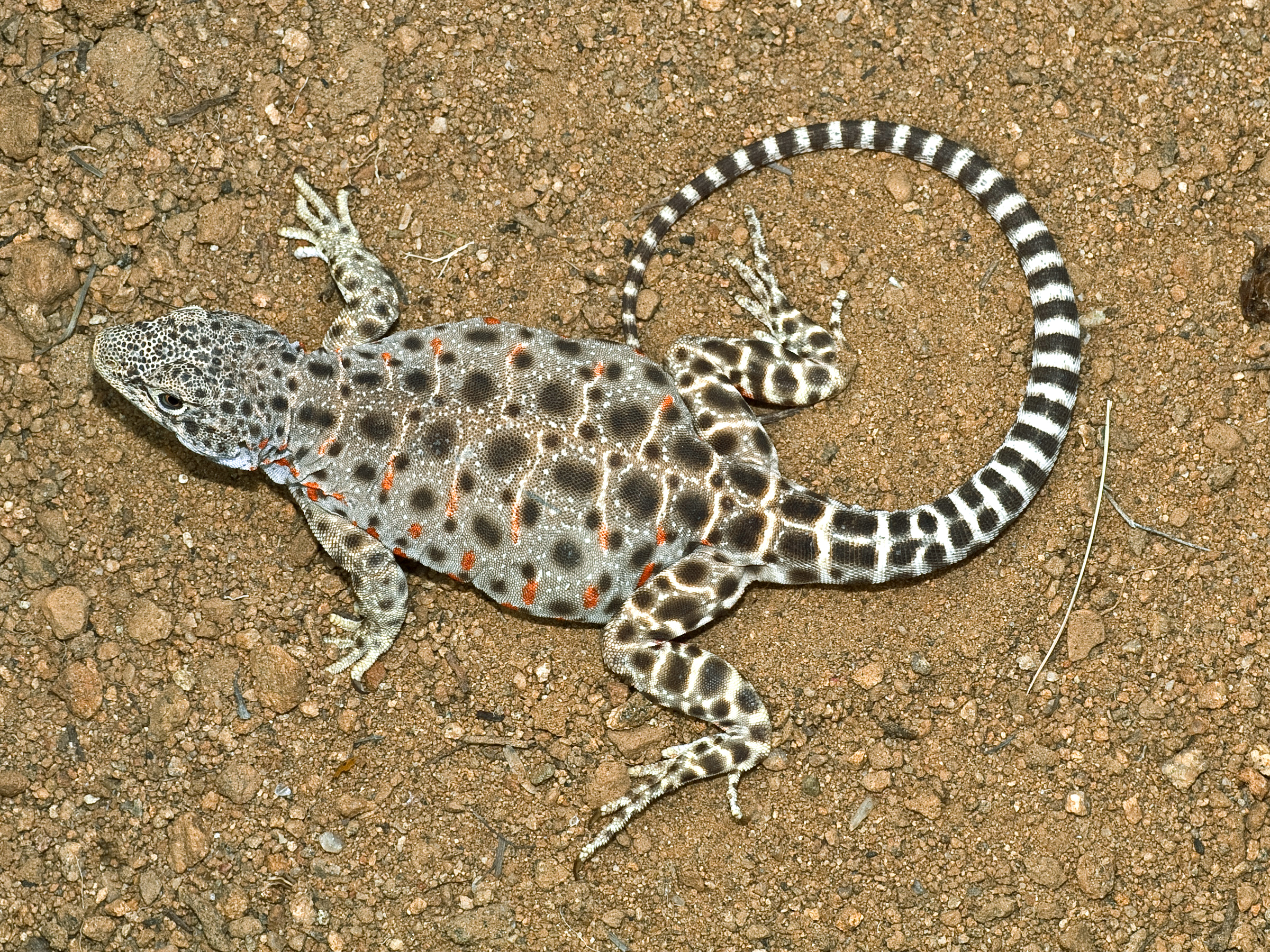
Larry Jones: Leopard Lizards
Ecology of the Long-nosed Leopard Lizard
Bada$$ of the Bajada
– Lawrence L.C. Jones, M.S. –
Independent Researcher,
Southwestern Zoologists’ League
Monday 31st August | 7pm MST
Location information below
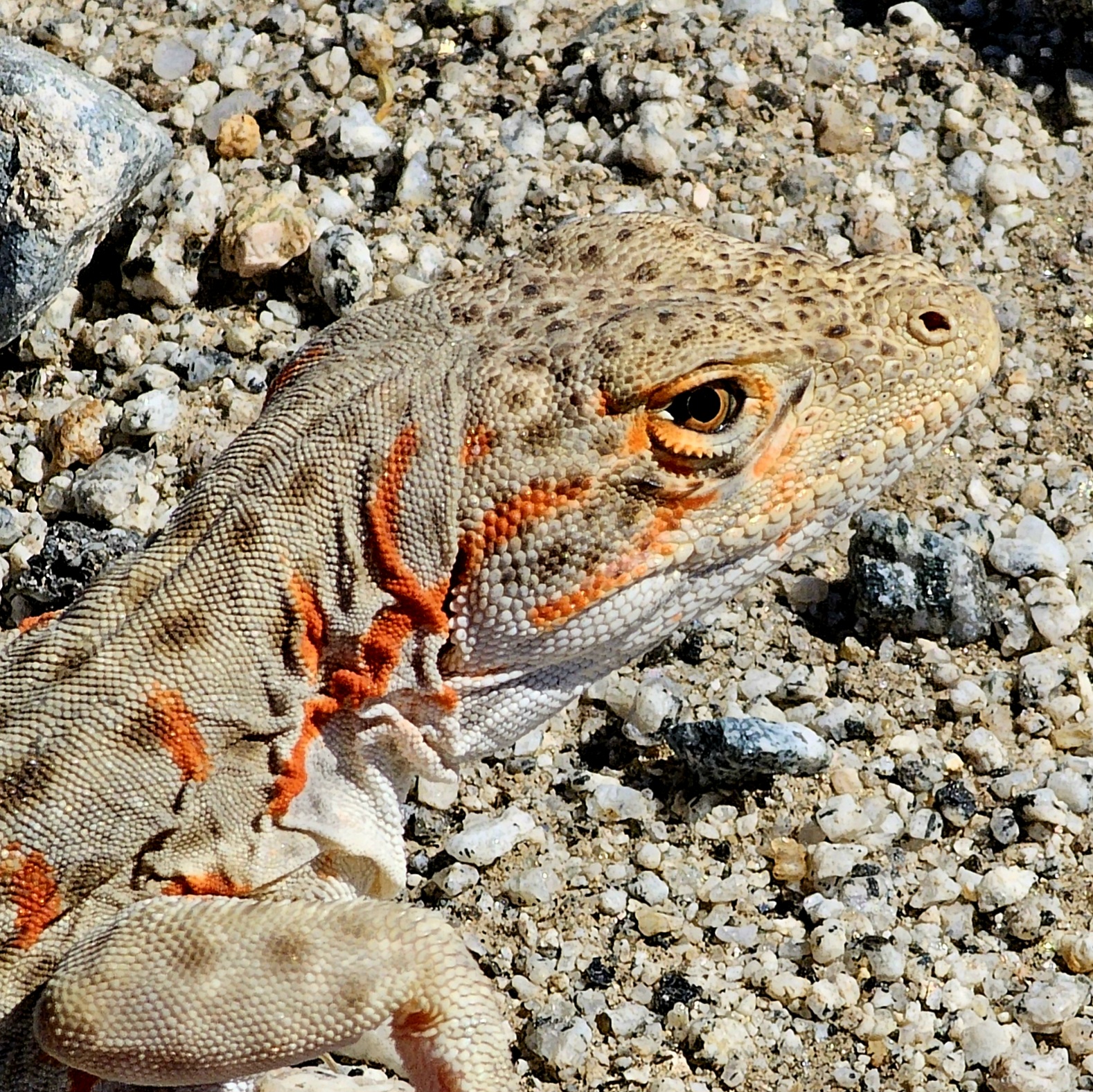
Since 2020, Larry Jones has been doing research on a roadside assemblage of heliothermic lizards in Saguaro National Park (Tucson Mountain District) and Ironwood Forest National Monument. Part of his research focused on the ecology of the Long-nosed Leopard Lizard (Gambelia wislizenii). To learn more about this species, he conducted radio telemetry on these lizards from 2021 to 2023 and 2025. The upshot is that little was known about G. wislizenii ecology, and his findings were not necessarily consistent with published literature. In this presentation, he will discuss some of the basic ecology, as well as some misconceptions about its ecological paradigms in my study area. In this presentation, he will focus on apparent rarity, feeding ecology, home ranges, movements, and uses and reuses of respite sites (sleeping, resting, ambush and thermoregulation sites, and day shelters).
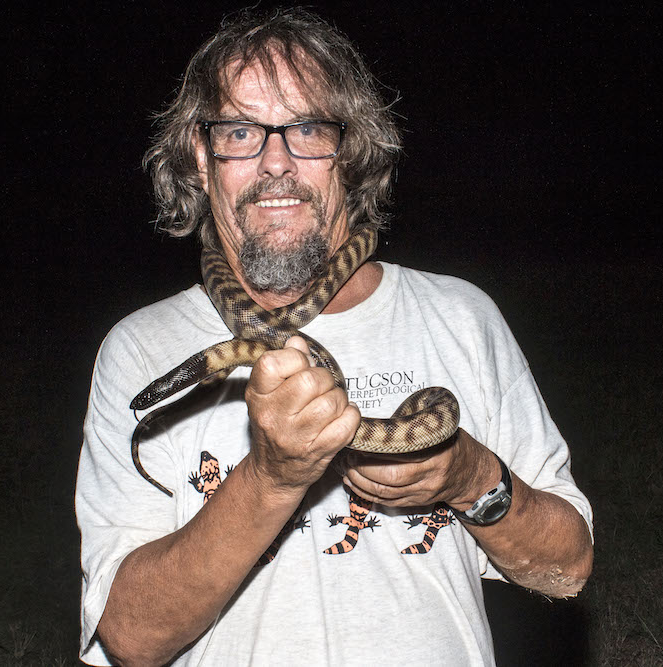
Larry “the Lizard Guy” Jones hails from southern California, where he was a Beach Bum X Desert Rat hybrid. He received a B.S. in Zoology and M.S. in Biology from California State University, Long Beach. After moving north and enduring 18 years of non-stop rain in the Pacific Northwest during the first half of his federal career as a Wildlife Biologist, he decided to switch his focus from studying wet lizards (salamanders) to dry lizards (lizards) near Safford and Tucson. After retirement, he increased his lizard studies and has worked part-time Keeper at a Tucson zoo. During a hiatus in lizard research, he studied scorpions near Tucson and co-edited Lizards of the American Southwest: A Photographic Field Guide. His four other books included Venomous Animals of the United States and Canada, Habitat Management Guidelines for Reptiles and Amphibians of the American Southwest, and two books on wet lizards of the Pacific Northwest. He also authored over 100 scientific and popular articles on marine fishes, reptiles, and mammals. He has been a member of THS since living in the Northwest (living the dry life vicariously!), served his time as board member and field trip leader, and received the Jarchow Conservation Award for herpetological conservation in 2024. However, his greatest achievement was having his fingers chewed by dozens of leopard lizards.
Meetings are free public events in person or virtually:
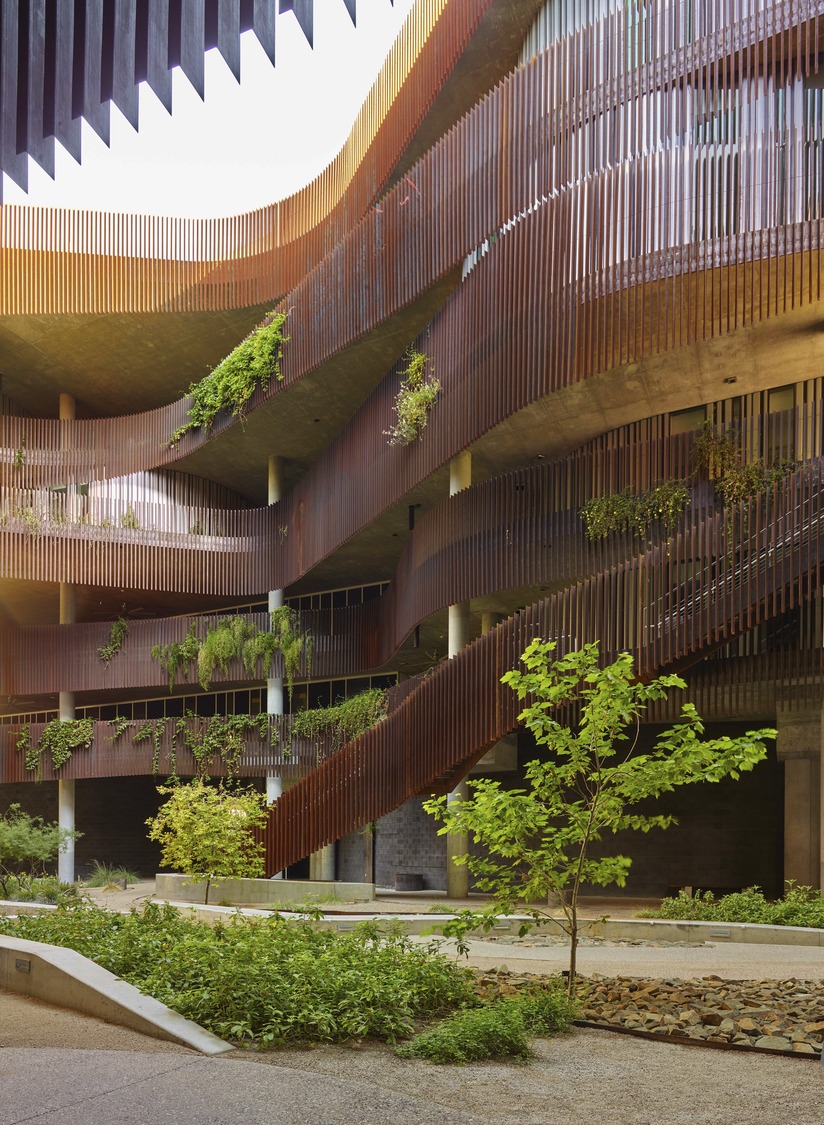
Environment and Natural Resources 2 (ENR2)
1064 E Lowell St, Tucson AZ 85719
Room S215 – 2nd Floor
Enter ENR2 from Lowell St (north side)
Room opposite side of entrance via elevators (right) or stairs (left)
Parking is FREE in lot south of ENR2 OR $1/hr (card payment only) in garage adjacent (east) ENR2
To attend via Zoom:
https://arizona.zoom.us/j/84861072937
Date
- Aug 31 2026
- Expired!
Time
- 7:00 pm - 9:00 pm
Location
- 1064 E Lowell St, Tucson AZ 85719