Taggert Butterfield: Sonoran and Río Fuerte Sliders
Studies and Conservation Concerns of
Trachemys nebulosa and Trachemys yaquia
– Taggert Butterfield, PhD –
Estudiantes Conservando la Naturaleza, AC
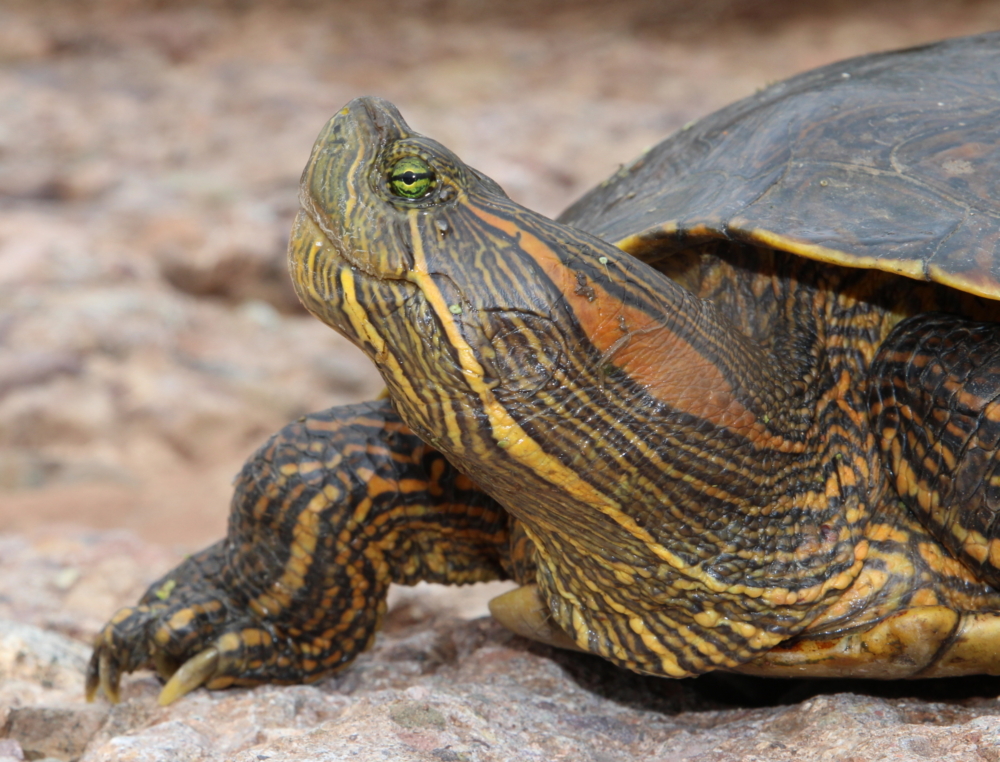
Freshwater turtles in Mexico remain poorly studied, limiting effective conservation assessments for many species. The Baja California slider (Trachemys nebulosa nebulosa), the Río Fuerte slider (Trachemys nebulosa hiltoni), and the Yaqui slider (Trachemys yaquia) are no exception. In this study, we evaluated abundance, population structure, morphology, and potential threats of T. n. nebulosa in Baja California Sur, T. n. hiltoni in Sonora and Sinaloa, and T. yaquia in Sonora. Using baited hoop nets, we conducted 367 trap nights and captured 258 individuals, including 43 unique T. n. hiltoni (23 recaptures), nine unique T. n. nebulosa, and 57 unique T. yaquia (16 recaptures). Capture rates were low for T. nebulosa across most sites (0–2.00 turtles per trap night), suggesting low population densities throughout its range. For T. yaquia, capture rates were higher during the first two years of sampling (0.50–0.78 turtles per trap night) but declined substantially during the prolonged 2023–2024 drought to 0.11 turtles per trap night. Interviews with local residents identified turtle consumption and gillnet use as the most widespread and severe threats to T. n. nebulosa, particularly in Sinaloa, in addition to sewage runoff, invasive turtles, and habitat degradation from agricultural water diversion. Prolonged drought appears to represent the most significant current threat to T. yaquia, with reduced detectability likely linked to the extreme drought conditions of 2023–2024. Our findings provide the first range-wide ecological assessment of T. nebulosa and the first multi-year sampling effort for T. yaquia, highlighting declining detectability and multiple anthropogenic pressures. These results underscore the need for expanded surveys and updated conservation assessments for both subspecies.
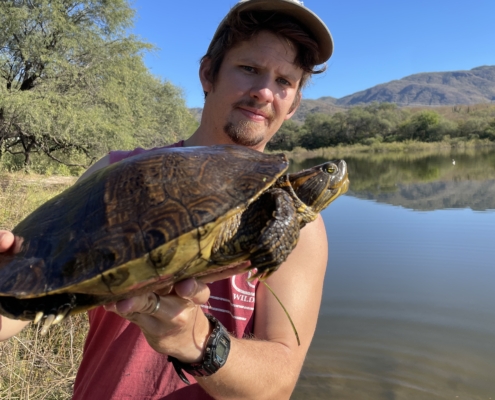 I first visited Mexico as part of Daniel Beck’s Regional Natural History Course in 2012, and the rest is history. Following the first course, I was eager to get back to Mexico, and spent two summers tracking Beaded Lizards before I got accepted into the Masters program at Central Washington University with Daniel Beck as my mentor. I worked with the Spotted wood turtle (Rhinoclemmys rubida) for my masters thesis. Following this, I moved to Mexico to pursue a Ph.D. at the National Autonomous University of Mexico (UNAM) comparing turtle communities in the states of Sonora, Yucatán, and Oaxaca. I finished my PhD in 2021, and since then I have dedicated my time to running a Mexican non-profit called Students Conserving Nature | Estudiantes Conservando la Naturaleza with my wife Alejandra Monsiváis-Molina. Our mission is to monitor populations of freshwater and terrestrial turtles, document their natural history, and provide a scholarship program in the local communities we work that is designed to prepare underserved students to become productive and responsible adults.
Meetings are free public events in person or virtually:
Environment and Natural Resources 2
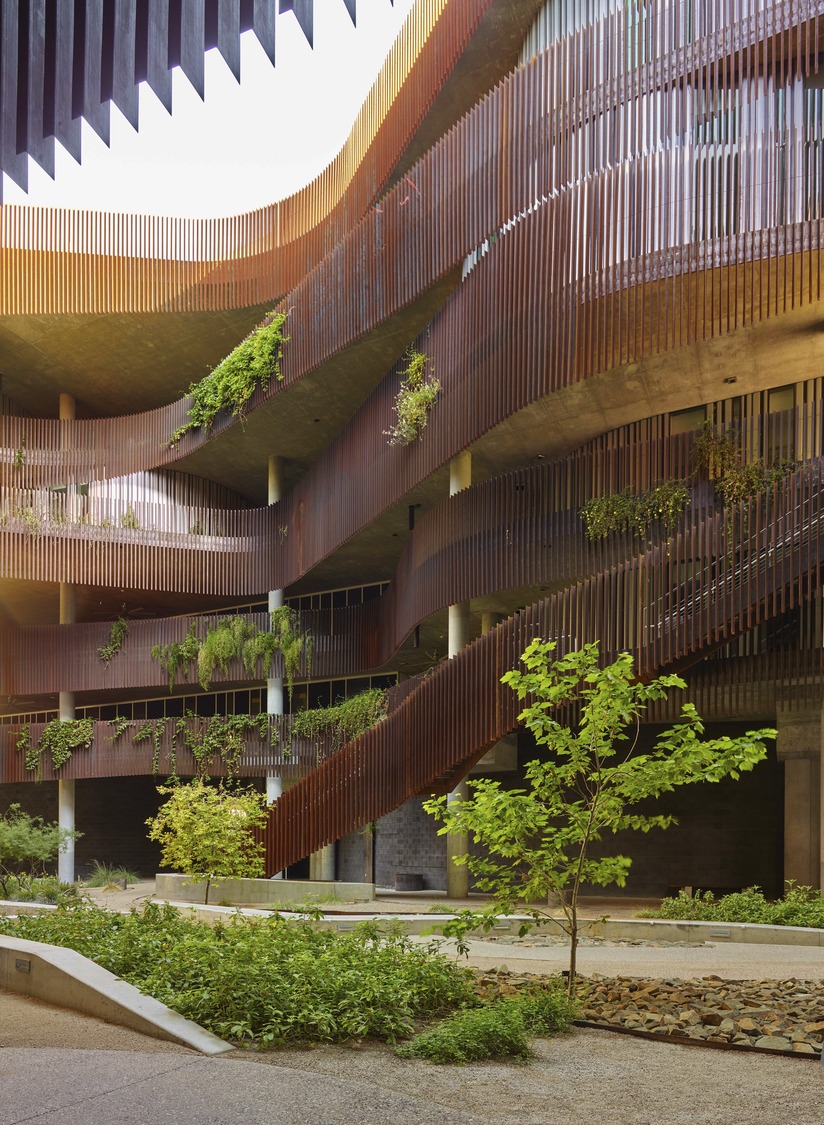
1064 E Lowell St, Tucson AZ 85719
Room S215 – 2nd Floor
Enter from Lowell St (north side)
Room opposite side of entrance via elevators (right) or stairs (left)
Parking is FREE in lot south of ENR2
OR
Paid garage adjacent (east) ENR2 (card or digital payment only)
To attend via Zoom:
https://arizona.zoom.us/j/87881196249
Date
- Mar 30 2026
Time
- 7:00 pm - 7:00 pm
Location
- 1064 E Lowell St, Tucson AZ 85719